AC Installation in North Texas: What to Expect
What Should You Expect During an Air Conditioner Installation in North Texas?
During an air conditioner installation in North Texas, homeowners can expect the HVAC team to remove the old equipment, prepare the installation area, install and connect the new AC system, check ductwork and airflow, test refrigerant levels, and verify proper operation. A quality installation also includes system testing and a homeowner walkthrough before the job is complete.
At Texas AC Services, we understand that replacing an air conditioner is a significant investment, especially in North Texas, where dependable cooling is essential for much of the year. Our team focuses on professional air conditioner installation with careful attention to system performance, efficiency, and customer care. From evaluating your home’s cooling needs to testing the finished system, our goal is to make the process straightforward and help you feel confident about your new equipment. Knowing what happens during an installation can also help you prepare your home, ask informed questions, and recognize the details that contribute to reliable long-term comfort.
What Happens During a Professional AC Installation?
A professional AC installation involves more than replacing one outdoor unit with another. Proper sizing, equipment setup, airflow, ductwork, refrigerant charge, electrical connections, and final testing all influence how well the new system performs.
ENERGY STAR warns that improper HVAC installation can reduce system efficiency by as much as 30 percent. That makes installation quality particularly important in North Texas, where air conditioners face substantial summer cooling demands.
What Happens Before the New Air Conditioner Is Installed?
The process should begin with an evaluation of the home and existing HVAC system. The technician needs to determine whether the selected equipment is appropriately sized and whether existing components, including the duct system, can support it.
ENERGY STAR recommends that HVAC contractors consider the home’s actual characteristics instead of relying on a rule of thumb for equipment sizing. A proper evaluation can account for factors such as the home’s size, insulation, windows, and cooling requirements.
This matters because bigger is not automatically better. An oversized air conditioner can cycle on and off too frequently, reducing comfort and potentially shortening equipment life.
Before installation begins, homeowners may also want to:
- Clear furniture and belongings away from indoor HVAC equipment.
- Make sure technicians have an unobstructed path to the outdoor condenser.
- Secure pets in a comfortable area away from the work zone.
- Ask whether technicians will need access to the attic, thermostat, electrical panel, or other areas.
- Confirm which equipment and components are included in the installation.
These simple preparations can help the air conditioning installation proceed efficiently.
How Is the Old AC System Removed and the New One Installed?
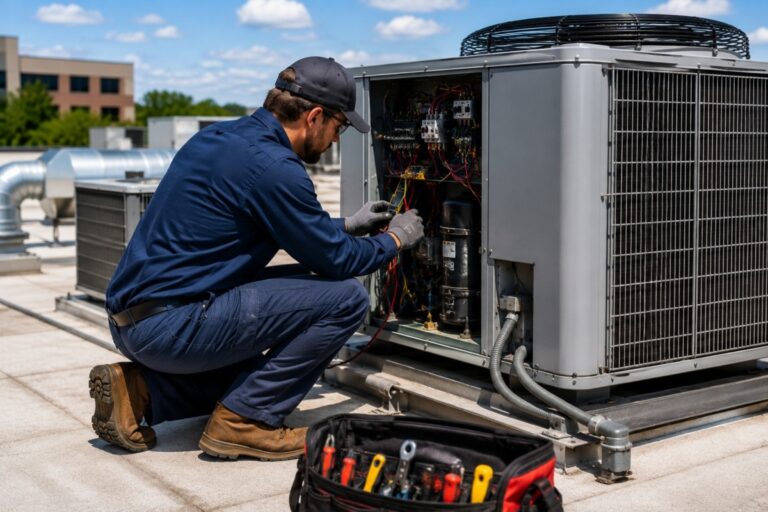
Once the work area is prepared, technicians can safely disconnect and remove the equipment being replaced. The exact steps depend on the home’s HVAC configuration and whether the project involves an air conditioner, furnace, air handler, heat pump, or other connected equipment.
Installation of the replacement system commonly includes:
- Positioning and securing the new indoor and outdoor equipment.
- Making the required electrical connections.
- Connecting refrigerant lines and condensate drainage.
- Connecting the equipment to the existing duct system.
- Installing or configuring the thermostat.
- Checking refrigerant charge and system airflow.
- Starting and testing the completed system.
A professional installation should not end simply because the new air conditioner turns on. ENERGY STAR identifies correct airflow and refrigerant charge as important parts of HVAC installation quality because problems in either area can hurt efficiency, comfort, and equipment performance.
Will the HVAC Technician Check Your Ductwork?
Yes, evaluating the duct system is an important part of determining whether a new central air conditioner can perform properly. Damaged, poorly sized, disconnected, or leaking ducts can prevent conditioned air from reaching rooms efficiently.
ENERGY STAR recommends having contractors inspect ducts for leaks and measure airflow to ensure it meets manufacturer specifications. ENERGY STAR also reports that sealing and insulating ducts can improve heating and cooling system efficiency by as much as 20 percent, and sometimes more.
If a technician discovers duct problems, recommendations may include sealing leaks, repairing damaged sections, correcting airflow restrictions, or modifying parts of the duct system.
Ductwork deserves particular attention in North Texas homes where ducts may run through hot attic spaces. An efficient new air conditioner cannot deliver its full benefits if cooled air is being lost before reaching the living areas.
How Is a New Air Conditioner Tested After Installation?
A new AC system should be tested and commissioned before the installation is considered finished. The purpose is to confirm that the installed equipment is operating as designed rather than simply verifying that cool air comes from the vents.
Depending on the equipment and installation, technicians may check:
- Refrigerant charge
- Blower and system airflow
- Thermostat operation
- Electrical connections
- Condensate drainage
- Supply and return airflow
- Indoor and outdoor equipment operation
- Temperature performance
ENERGY STAR’s HVAC commissioning guidance includes tasks such as measuring blower airflow and checking refrigerant charge.
Once testing is complete, your technician should explain basic system operation, thermostat controls, filter requirements, and recommended AC maintenance. This is also a good time to ask about warranties and what to do if you notice an unusual sound, odor, temperature difference, or other problem after installation.
Why Does Installation Quality Matter So Much in North Texas?
North Texas places significant seasonal demand on residential cooling systems, making correct AC installation critical for comfort and efficiency.
National Weather Service climate normals for Dallas-Fort Worth show about 20.2 days per year with temperatures reaching at least 100°F. July and August each average more than 640 cooling degree days, illustrating the region’s substantial summertime cooling demand.
Under those conditions, installation problems can become noticeable quickly. Poor airflow may create uncomfortable rooms, incorrect sizing can lead to cycling problems, and leaky ducts can waste cooled air.
Choosing experienced professionals for air conditioner installation in North Texas helps ensure the entire system, not just the equipment itself, is prepared to handle local cooling demands.
Frequently Asked Questions About AC Installation
How long does an air conditioner installation take?
Many straightforward residential AC replacements can be completed within a day, but the exact timeline depends on the system and the amount of additional work required. Duct modifications, electrical upgrades, equipment-access challenges, or other installation needs can extend the project.
Do I need to be home during AC installation?
It is generally helpful for an adult to be available at the beginning and end of the installation. Your HVAC company can tell you whether someone must remain home throughout the entire appointment.
Should ductwork be replaced when installing a new AC?
Not necessarily. Existing ductwork may continue to work well if it is properly sized, sealed, insulated, and in good condition. A professional should evaluate the ducts and recommend repairs or replacement when problems could affect airflow or efficiency.
What should I check after a new AC is installed?
Confirm that the system cools consistently, the thermostat works correctly, airflow feels appropriate, and you understand filter and maintenance requirements. Ask your installer to explain equipment operation, warranty information, and the recommended air conditioner maintenance schedule.
Ready for Air Conditioner Installation in North Texas?
A successful AC replacement is about more than new equipment. Proper sizing, careful installation, duct and airflow evaluation, refrigerant setup, and final testing all contribute to dependable cooling and long-term performance.
Texas AC Services provides professional AC installation, AC service, HVAC installation, and related cooling solutions for North Texas homeowners. Our team can help you select and install a system designed to keep your home comfortable through demanding Texas summers.
Ready for professional air conditioner installation in North Texas? Contact Texas AC Services today.